Mercan CMS

Author: mercan-admin

  • Portugal Reviews ARI Processing: What Investors Need to Know About Biometric Appointment Updates

    The Portuguese government has recently implemented changes to the processing of Investment Residence Authorization (ARI) applications, specifically targeting investors awaiting biometric appointments. These modifications aim to enhance efficiency and address existing backlogs within the system.

    Key Changes

    The updates focus on prioritizing pending biometric appointments and streamlining the overall application workflow. This initiative seeks to expedite processing times for older applications while ensuring adherence to procedural requirements.

    Who Is Affected?

    These changes primarily impact investors whose applications are pending biometric appointments. Investors with applications that have already been formalized or completed remain unaffected by this update.

    Next Steps for Investors

    • Await Guidance: If your application falls into the affected category, our legal team will contact you next week with detailed instructions on how to proceed.
    • Direct Communication: Our lawyers are closely monitoring these developments and will provide personalized guidance tailored to your specific situation.

    We are committed to keeping all investors informed and supported during this transition. Our team is actively working to adapt to these changes to ensure your application is handled efficiently.

    For any questions, please contact your lawyer or our support team directly.

    Stay updated by following our website for the latest news and developments regarding ARI application processing.

  • Major Changes to Canada’s Temporary Worker Program in 2024 and Beyond

    Canada’s Recent Immigration Updates: A Guide to the Temporary Worker Program and Beyond

    As we enter 2024, the Government of Canada has introduced several key announcements that will impact the Temporary Worker Program, particularly the low-wage stream. Additionally, Canada has also implemented policies prohibiting visitors in Canada from applying for a work permit from within the country. Furthermore, the government has announced a new caregiver program that will allow caregivers to become permanent residents, and a reduction in the number of hours international students can work.

    Temporary Worker Program: Key Updates and Changes

    • Low-Wage Stream: The Government of Canada has made significant changes to the Temporary Worker Program, specifically for the low-wage stream. However, the specifics of these changes are not detailed within the given text.
    • Prohibition on Applying for Work Permits from within Canada: Canada has implemented new policies that prohibit visitors in Canada from applying for a work permit from within the country. This means that individuals who are currently in Canada on a visitor visa will not be able to apply for a work permit while they are in the country.

    New Caregiver Program and Path to Permanent Residency

    In a separate announcement, the Government of Canada has introduced a new caregiver program that will allow caregivers to arrive as permanent residents. This program aims to address the growing demand for caregivers in Canada and provide a pathway for them to become permanent residents.

    Changes to International Student Work Hours

    The government has also announced a reduction in the number of hours international students can work while studying in Canada. This change aims to ensure that international students have sufficient time to focus on their studies and transition to a permanent resident status.

    Looking Ahead to 2025 and Beyond

    As we look towards 2025 and beyond, several factors may influence immigration policies in Canada. Some potential changes to expect include:

    • Increased focus on high-skilled workers: Canada may prioritize high-skilled workers in its immigration policies, potentially leading to a shift in the types of workers being admitted to the country.
    • More emphasis on economic growth: The government may focus on policies that promote economic growth and job creation, potentially leading to changes in the Temporary Worker Program and other immigration streams.
    • Continued emphasis on diversity and inclusion: Canada has a strong commitment to diversity and inclusion, and it is likely that the government will continue to prioritize these values in its immigration policies.
    Strengthening the Temporary Foreign Worker Program: Why Stricter Regulations are Necessary

    As Canada continues to navigate the complexities of immigration and labor market dynamics, the Temporary Foreign Worker Program (TFWP) remains a crucial component of the country’s economic strategy. However, from time to time, the government must adapt and refine the program to address various concerns and challenges. One way to achieve this is by implementing stricter regulations.

    Why Stricter Regulations are Necessary

    Canada’s Temporary Foreign Worker Program is a vital tool for addressing labor market shortages and supporting economic growth. However, the program also faces several challenges that require attention. Some of the key reasons for stricter regulations include:

    • Protecting the Domestic Labor Market: Stricter regulations can help prevent the exploitation of domestic workers, ensuring that Canadian citizens and permanent residents have access to job opportunities and fair wages.
    • Preventing the Exploitation of Foreign Workers: By imposing stricter standards, the government can protect foreign workers from exploitation and ensure they are treated fairly and with respect.
    • Ensuring Compliance with Labor Standards: Stricter regulations can help enforce labor standards, guaranteeing that foreign workers receive the same rights and benefits as Canadian citizens.
    • Maintaining Public Support: By addressing concerns about the TFWP, the government can maintain public support for the program and ensure its long-term viability.
    • Balancing Economic Needs: Stricter regulations can help balance the competing demands of economic growth and social responsibility, ensuring that the program meets the needs of both employers and workers.
    • Aligning with Long-Term Immigration Goals: By refining the TFWP, the government can align the program with its long-term immigration goals, promoting a more sustainable and equitable approach to immigration.

    The Benefits of Stricter Regulations

    Stricter regulations can have a positive impact on the Temporary Foreign Worker Program, promoting fairness, integrity, and compliance. Some of the benefits of stricter regulations include:

    • Promoting Fairness: By setting clear standards and guidelines, stricter regulations can promote fairness and equity in the recruitment and hiring process.
    • Upholding the Integrity of the Program: Stricter regulations can help maintain the integrity of the TFWP, ensuring that the program operates as intended and meets its objectives.
    • Enhancing Compliance: Stricter regulations can encourage compliance with labor standards and regulations, reducing the risk of non-compliance and its associated consequences.
    • Supporting Economic Growth: By promoting fair labor practices and protecting workers’ rights, stricter regulations can support economic growth and stability in the long term.

    In conclusion, stricter regulations are a necessary step in ensuring the Temporary Foreign Worker Program operates effectively and efficiently. By addressing the challenges and concerns associated with the program, stricter regulations can promote fairness, integrity, and compliance, ultimately supporting the growth and prosperity of Canada’s economy.

    As Canada continues to navigate the complexities of immigration and labor market dynamics, the Temporary Foreign Worker Program (TFWP) remains a crucial component of the country’s economic strategy. However, from time to time, the government must adapt and refine the program to address various concerns and challenges. One way to achieve this is by implementing stricter regulations.

    Why Stricter Regulations are Necessary

    Canada’s Temporary Foreign Worker Program is a vital tool for addressing labor market shortages and supporting economic growth. However, the program also faces several challenges that require attention. Some of the key reasons for stricter regulations include:

    • Protecting the Domestic Labor Market: Stricter regulations can help prevent the exploitation of domestic workers, ensuring that Canadian citizens and permanent residents have access to job opportunities and fair wages.
    • Preventing the Exploitation of Foreign Workers: By imposing stricter standards, the government can protect foreign workers from exploitation and ensure they are treated fairly and with respect.
    • Ensuring Compliance with Labor Standards: Stricter regulations can help enforce labor standards, guaranteeing that foreign workers receive the same rights and benefits as Canadian citizens.
    • Maintaining Public Support: By addressing concerns about the TFWP, the government can maintain public support for the program and ensure its long-term viability.
    • Balancing Economic Needs: Stricter regulations can help balance the competing demands of economic growth and social responsibility, ensuring that the program meets the needs of both employers and workers.
    • Aligning with Long-Term Immigration Goals: By refining the TFWP, the government can align the program with its long-term immigration goals, promoting a more sustainable and equitable approach to immigration.

    The Benefits of Stricter Regulations

    Stricter regulations can have a positive impact on the Temporary Foreign Worker Program, promoting fairness, integrity, and compliance. Some of the benefits of stricter regulations include:

    • Promoting Fairness: By setting clear standards and guidelines, stricter regulations can promote fairness and equity in the recruitment and hiring process.
    • Upholding the Integrity of the Program: Stricter regulations can help maintain the integrity of the TFWP, ensuring that the program operates as intended and meets its objectives.
    • Enhancing Compliance: Stricter regulations can encourage compliance with labor standards and regulations, reducing the risk of non-compliance and its associated consequences.
    • Supporting Economic Growth: By promoting fair labor practices and protecting workers’ rights, stricter regulations can support economic growth and stability in the long term.

    In conclusion, stricter regulations are a necessary step in ensuring the Temporary Foreign Worker Program operates effectively and efficiently. By addressing the challenges and concerns associated with the program, stricter regulations can promote fairness, integrity, and compliance, ultimately supporting the growth and prosperity of Canada’s economy.

    Navigating Canada’s Immigration Landscape: What’s New for 2025 and Beyond

    As a seasoned immigration expert with over 35 years of experience, we’re excited to share our insights on the latest trends and developments in Canada’s immigration industry. At Mercan Group, we’ve had the privilege of assisting over 15,000 foreign workers and 50,000 individuals in their journey to Canada. In this blog, we’ll dive into what’s next for 2025 and beyond, helping you unlock your chances for success.

    Understanding the Basics: Key Terms for Your Pathway to Canada

    Before we explore the latest developments, it’s essential to understand some crucial terms that will help you navigate Canada’s immigration landscape. Let’s define three key concepts:

    • Labour Market Impact Assessment (LMIA): An LMIA is a document issued by Employment and Social Development Canada (ESDC) that assesses the impact of hiring a foreign worker on the Canadian labour market. It determines whether the worker will have a positive or negative impact on the Canadian economy. If a positive LMIA is obtained, it indicates that the foreign worker will not displace Canadian workers and will contribute to the country’s economic growth.
    • Low-Wage: In Canada, low-wage jobs are typically defined as those that pay less than $30 per hour. These jobs are often in sectors such as hospitality, food service, and retail. However, it’s worth noting that low-wage jobs can vary depending on the province and region.
    • Skills Levels in Canada: Canada’s National Occupational Classification (NOC) system categorizes occupations into four skill levels:
      • Skill Level 0: Management occupations
      • Skill Level A: Professional occupations
      • Skill Level B: Technical occupations and skilled trades
      • Skill Level C: Service occupations and sales
      • Skill Level D: Service occupations and sales
      • Skill Level E: Labourer occupations

    What’s New for 2025 and Beyond?

    As we look to 2025 and beyond, several key trends and developments are expected to shape Canada’s immigration landscape. Some of these include:

    • Increased Emphasis on Skilled Workers: Canada will continue to focus on attracting skilled workers with in-demand skills and qualifications. This includes occupations in fields such as technology, healthcare, and finance.
    • Digital Transformation: The COVID-19 pandemic has accelerated the shift to digital technologies, and Canada will continue to leverage these advancements to streamline immigration processes and improve services.
    • Enhanced Regional Immigration Initiatives: Canada will continue to develop regional immigration initiatives, such as the Provincial Nominee Program (PNP) and the Rural and Northern Immigration Pilot (RNIP), to promote economic growth and development in smaller communities.
    • Increased Focus on Integration: Canada will prioritize the integration of newcomers, providing support services and resources to help them settle and thrive in their new communities.

    At Mercan Group, we’re committed to helping you navigate the complexities of Canada’s immigration landscape. Stay tuned for our upcoming blogs, where we’ll dive deeper into these trends and provide you with expert insights and advice to help you achieve your goals.

    Navigating Canada’s Immigration Landscape: What’s New for 2025 and Beyond

    As a seasoned immigration expert with over 35 years of experience, we’re excited to share our insights on the latest trends and developments in Canada’s immigration industry. At Mercan Group, we’ve had the privilege of assisting over 15,000 foreign workers and 50,000 individuals in their journey to Canada. In this blog, we’ll dive into what’s next for 2025 and beyond, helping you unlock your chances for success.

    Understanding the Basics: Key Terms for Your Pathway to Canada

    Before we explore the latest developments, it’s essential to understand some crucial terms that will help you navigate Canada’s immigration landscape. Let’s define three key concepts:

    • Labour Market Impact Assessment (LMIA): An LMIA is a document issued by Employment and Social Development Canada (ESDC) that assesses the impact of hiring a foreign worker on the Canadian labour market. It determines whether the worker will have a positive or negative impact on the Canadian economy. If a positive LMIA is obtained, it indicates that the foreign worker will not displace Canadian workers and will contribute to the country’s economic growth.
    • Low-Wage: In Canada, low-wage jobs are typically defined as those that pay less than $30 per hour. These jobs are often in sectors such as hospitality, food service, and retail. However, it’s worth noting that low-wage jobs can vary depending on the province and region.
    • Skills Levels in Canada: Canada’s National Occupational Classification (NOC) system categorizes occupations into four skill levels:
      • Skill Level 0: Management occupations
      • Skill Level A: Professional occupations
      • Skill Level B: Technical occupations and skilled trades
      • Skill Level C: Service occupations and sales
      • Skill Level D: Service occupations and sales
      • Skill Level E: Labourer occupations

    What’s New for 2025 and Beyond?

    As we look to 2025 and beyond, several key trends and developments are expected to shape Canada’s immigration landscape. Some of these include:

    • Increased Emphasis on Skilled Workers: Canada will continue to focus on attracting skilled workers with in-demand skills and qualifications. This includes occupations in fields such as technology, healthcare, and finance.
    • Digital Transformation: The COVID-19 pandemic has accelerated the shift to digital technologies, and Canada will continue to leverage these advancements to streamline immigration processes and improve services.
    • Enhanced Regional Immigration Initiatives: Canada will continue to develop regional immigration initiatives, such as the Provincial Nominee Program (PNP) and the Rural and Northern Immigration Pilot (RNIP), to promote economic growth and development in smaller communities.
    • Increased Focus on Integration: Canada will prioritize the integration of newcomers, providing support services and resources to help them settle and thrive in their new communities.

    At Mercan Group, we’re committed to helping you navigate the complexities of Canada’s immigration landscape. Stay tuned for our upcoming blogs, where we’ll dive deeper into these trends and provide you with expert insights and advice to help you achieve your goals.

    Understanding the Labour Market Impact Assessment (LMIA)

    Before you can work in Canada, your potential employer needs to obtain a Labour Market Impact Assessment (LMIA). This document is crucial and acts as a “labor market opinion” issued by Employment and Social Development Canada (ESDC).

    What does an LMIA do? It essentially allows your employer to hire a foreign worker for a specific, confirmed, and legitimate job in Canada. The LMIA process ensures that hiring a foreign worker is necessary and beneficial to the Canadian economy.

    In simple terms, the LMIA process checks that:

    • There are not enough qualified Canadians or permanent residents available for the job.
    • Hiring a foreign worker will not negatively impact Canadian wages or working conditions.

    This is a crucial step in the immigration process, and it’s important to understand its role in your journey to Canada.

    What Does “Low-Wage” Mean in Canada?

    In Canada, “low-wage” generally refers to any hourly wage that falls below the median hourly wage for a specific region or industry.

    Here’s the key takeaway: The definition of low-wage isn’t fixed. It depends heavily on the cost of living in different parts of Canada.

    To put it simply: If you’re earning significantly less than the average or median wage for your profession in your region, you’re likely considered to be in a low-wage position.

    Why is this important? Understanding low-wage classifications can help you evaluate job opportunities, assess your earning potential, and potentially advocate for higher wages.

    Navigating Canadian Job Classifications: NOC and TEER

    Have you heard the terms NOC and TEER? These are important classifications used in Canada to categorize skills and occupations.

    The National Occupational Classification (NOC) system is used by Immigration, Refugees and Citizenship Canada (IRCC) and Employment and Social Development Canada (ESDC) to organize jobs within the Canadian labor market. This system helps to define and standardize job titles and responsibilities.

    In 2021, the NOC was updated to a new version called TEER (The Employment and Economic Classification of Occupations in Canada). While the new TEER system is in place, the previous classification (NOC 2016) is still commonly referenced.

    Why are NOC and TEER important?

    • Immigration: IRCC uses NOC and TEER to assess the skills and qualifications of potential immigrants.
    • Job Searching: Understanding the NOC/TEER classification for your profession helps you find relevant job postings and understand the competitive landscape.
    • Education and Training: These classifications can help you determine which educational pathways are most relevant to your career goals.

    We’ll explore the specific details of NOC and TEER in upcoming blog posts, helping you navigate these important classifications in the Canadian job market.

    Understanding the NOC 2016 Skill Levels:

    The NOC 2016 system categorizes occupations into five skill levels, reflecting the educational requirements and complexity of the work. Here’s a breakdown:

    NOC 0: Management Jobs

    These roles involve planning, directing, and coordinating the work of others. They often require significant experience and leadership skills.

    • Examples: Restaurant Managers, Mine Managers, Shore Captains (fishing)

    NOC A: Professional Jobs

    These occupations typically require a university degree and advanced knowledge in a specific field.

    • Examples: Doctors, Dentists, Architects, Nurses

    NOC B: Technical Jobs and Skilled Trades

    These jobs typically require a college diploma or apprenticeship training, along with hands-on skills.

    • Examples: Supervisors, Chefs, Plumbers, Electricians

    NOC C: Intermediate Jobs

    These roles often require a high school diploma and/or job-specific training.

    • Examples: Long-haul Truck Drivers, Food and Beverage Servers

    NOC D: Labour Jobs

    These occupations typically involve on-the-job training and may not require formal qualifications.

    • Examples: Cleaning Staff, Food Counter Attendants, Farmers, Fishplant workers

    Navigating the NOC 2016 Skill Levels

    Understanding the NOC 2016 skill levels can help you:

    • Find relevant job postings: Use the NOC code to filter your job search.
    • Assess your skills: Determine your skill level and identify potential career paths.
    • Evaluate your educational needs: Understand the qualifications required for your desired occupation.

    This information is crucial for anyone working in, or hoping to enter, the Canadian job market.

    Understanding the TEER System: A New Framework for Canadian Occupations

    In 2021, Canada introduced the NOC 2021 system, which brought with it a new framework known as the Training, Education, Experience and Responsibilities (TEER) system. The TEER system replaces the former skill types and levels with a more detailed categorization:

    TEER 0: Management Occupations

    This category remains consistent with the NOC 0 category in the previous system, encompassing roles that involve planning, directing, and coordinating the work of others.

    TEER 1: Occupations typically requiring a university degree

    Similar to the NOC A category, this level includes professions that generally require a university degree and advanced knowledge in a specific field.

    TEER 2: Occupations typically requiring a college diploma or apprenticeship training of 2 years or more, supervisory occupations, or those with significant safety responsibilities

    This category aligns more closely with higher-level NOC B jobs, encompassing positions that demand a significant level of technical expertise and responsibility.

    TEER 3: Occupations typically requiring a college diploma or apprenticeship training of less than 2 years or more than 6 months of on-the-job training

    This level aligns with lower-level NOC B jobs, typically requiring specialized knowledge and training but less extensive experience than TEER 2.

    TEER 4: Occupations typically requiring a high school diploma or several weeks of on-the-job training

    Similar to the NOC C category, this level encompasses roles that typically require a high school diploma and job-specific training.

    TEER 5: Occupations typically requiring no formal education or only a high school diploma

    This category mirrors the NOC D category, encompassing occupations that generally rely on on-the-job training and may not require formal qualifications.

    Navigating the TEER System for Immigration

    The specific TEER or NOC level required for immigration programs or employment criteria can vary. Understanding the category your occupation falls under is crucial for navigating different immigration pathways, including Express Entry, Provincial Nominee Programs (PNPs), and other labor market assessments.

    For the most accurate and up-to-date information, always refer to the official NOC webpage of the Canadian government, where you can search for job titles and their corresponding NOC or TEER categories.

    New Measures Impacting Low-Wage LMIA Applications in Canada

    Effective September 26, 2024, significant changes are being implemented for Labor Market Impact Assessment (LMIA) applications related to low-wage positions in Canada. These measures aim to prioritize Canadian workers and safeguard employment opportunities:

    1. LMIA Processing Restrictions in High Unemployment Areas:

    LMIA applications for low-wage positions will no longer be processed in regions with an unemployment rate of 6% or higher. This aims to ensure that available positions are first offered to Canadian residents.

    2. Reduced Cap on Low-Wage Positions:

    The cap on the number of low-wage positions for which an LMIA can be obtained has been reduced from 20% to 10% of an employer’s total workforce. For example, a company with 10 employees can only hire one foreign worker for a low-wage position.

    3. Shorter Maximum Employment Duration:

    The maximum employment duration for low-wage positions is being shortened from 2 years to 1 year. This means that foreign workers granted work permits will have a maximum of one year to work in their respective positions.

    4. Additional LMIA Processing Restrictions:

    LMIA applications for low-wage positions exceeding the new cap will not be processed. LMIA applications for in-home caregiver positions requiring live-in arrangements are also no longer eligible. Additionally, employers who have had an LMIA revoked within the past two years will not be able to submit new applications.

    Key Takeaways:

    These changes emphasize the Canadian government’s commitment to protecting domestic job opportunities and fostering a robust labor market. Employers seeking to hire foreign workers for low-wage positions must carefully consider these new regulations and ensure their applications meet the revised criteria.

    LMIA Processing Pause in Montreal for Low-Wage Positions

    From September 3, 2024, to March 3, 2025, LMIA applications for low-wage positions in the Montreal area will not be processed for positions paying below the Quebec median hourly wage of $27.47.

    This pause in processing applies only to the Montreal region and is temporary, lasting for a period of six months. It aims to ensure that employment opportunities in the region are offered to Canadian residents first, particularly for positions that fall within the lower wage range.

    Key Takeaways:

    • This temporary pause in processing applies only to LMIA applications for low-wage positions in Montreal.
    • The wage threshold for this pause is set at the Quebec median hourly wage of $27.47.
    • This measure is in effect from September 3, 2024, to March 3, 2025.

    It’s important for employers seeking to hire foreign workers for low-wage positions in Montreal to be aware of this temporary processing pause and adjust their hiring plans accordingly.


    LMIA Changes Impacting Low-Wage Positions in Canada: What You Need to Know

    Recent changes to the Labour Market Impact Assessment (LMIA) process for low-wage positions in Canada can have significant implications for both applicants and employers. Here’s a breakdown of what these changes mean:

    For Applicants:

    • Tighter Eligibility: The restriction on LMIA processing for low-wage positions in areas with unemployment rates of 6% or higher reduces job opportunities for applicants in these locations. Applicants should consider targeting areas with lower unemployment rates.
    • Reduced Quota: The reduction of the cap from 20% to 10% means fewer job opportunities for foreign workers in low-wage positions. Companies can hire fewer foreign workers, leading to increased competition among applicants.
    • Shorter Employment Duration: The employment duration has been reduced from 2 years to 1 year. This means applicants can only work for a shorter period, requiring more frequent renewals or job changes, and potentially leading to increased uncertainty in their employment situation.
    • Location-Specific Restrictions: For example, in the Montreal area, LMIA applications for low-wage positions paying below the median hourly wage of $27.47 will not be processed from September 3, 2024, to March 3, 2025. This limits opportunities in this region for that period.
    • Increased Scrutiny: Applications in certain categories, such as those with live-in requirements or from employers with revoked LMIAs in the past 2 years, will no longer be processed. Applicants in these categories may encounter additional hurdles.

    These changes demonstrate a shift in the LMIA process for low-wage positions. Applicants should be aware of these changes and adjust their strategies accordingly to navigate this evolving landscape.

    LMIA Changes Impacting Low-Wage Positions in Canada: What You Need to Know (For Employers)

    Recent changes to the Labour Market Impact Assessment (LMIA) process for low-wage positions in Canada can significantly affect employers. Here’s a breakdown of what these changes mean:

    For Employers:

    • Stricter Regional Constraints: Employers in areas with high unemployment rates (6% or higher) can no longer hire foreign workers for low-wage positions. They may need to explore hiring local candidates or alternative staffing strategies.
    • Lower Foreign Worker Cap: The reduction of the cap to 10% limits the number of low-wage foreign workers employers can hire. This presents a challenge for businesses that heavily rely on low-wage positions and face labor shortages.
    • Shorter Hiring Terms: The decrease in employment duration to 1 year means employers could experience higher turnover and increased costs and administrative work associated with frequent hiring and training.
    • Ineligibility for Certain Positions: Positions with live-in requirements for in-home caregivers and roles exceeding the current cap are no longer eligible for processing. This requires employers to adapt their workforce planning.
    • Impact in Montréal: For a limited time, employers in the Montreal region will face additional constraints as LMIA applications for low-wage positions below the Quebec median hourly wage are not processed. This could cause temporary staff shortages in positions traditionally filled by foreign workers.
    • Compliance and Risk Management: Employers with a history of revoked LMIAs are no longer eligible to process new applications. This highlights the importance of compliance and proper management of foreign worker programs.

    These changes aim to encourage the hiring of local workers, reduce unemployment, and strengthen control over the foreign worker program to ensure its fair and effective operation. For both applicants and employers, adapting to these changes is crucial for success in Canada’s labor market.

    Hope Remains for Canadian Job Seekers: Key Sectors Not Affected by LMIA Changes

    For applicants who haven’t yet made it to Canada, you may be wondering if there’s still hope. The good news is that some sectors remain unaffected by the recent changes to the LMIA process. These include:

    • Agriculture: Jobs in the agriculture industry, such as farm workers and agricultural technicians, are not subject to the new restrictions.
    • Construction: Construction trades, like carpenters, electricians, and plumbers, continue to be eligible for LMIA applications.
    • Food Processing: Positions in food processing facilities are still open to foreign workers.
    • Education: LMIA applications for educators, including teachers and professors, remain unaffected.
    • Health and Social Services: Jobs in healthcare, such as nurses, doctors, and social workers, continue to be eligible.
    • Home Care Providers: Home care providers for medical needs are exempt from the new restrictions.

    Additionally, these occupations are not affected by the recent LMIA changes:

    • High-Wage Occupations: Jobs with high salaries are exempt, regardless of the industry.
    • Express Entry: LMIA applications processed under the Express Entry system are not impacted by the changes.
    • Simplified LMIA in Quebec: The list of occupations in Quebec eligible for a simplified LMIA process remains the same.
    • Provincial Nominee Programs: Many provincial nominee programs do not require a job offer.

    Gaining Work Experience:

    It’s important to note that Canada has a high visa refusal rate for applicants without relevant work experience in their field. Therefore, it’s highly advisable to gain work experience in in-demand occupations before applying to work in Canada. This will significantly increase your chances of being approved and joining Canada’s labor force.

    LMIA Processing: What’s Still Eligible and What’s Not

    Let’s break down which sectors still qualify for LMIA processing and which aren’t affected by recent changes.

    But first, it’s crucial to remember that an LMIA is just one piece of the puzzle. You’ll also need to go through the work visa application process, where immigration officials will scrutinize your background. Having an LMIA doesn’t guarantee you’ll be granted a work visa. It’s a significant step, but not the final word.

    Interested in learning more about how to increase your chances of success with an overseas application? I have a blog post dedicated to just that!

    Now, let’s dive into the LMIA process: Which sectors are still eligible? Read on!

    LMIA Processing: In-Home Caregiver Positions

    In-home caregiver positions are still eligible for LMIA processing, but there are some specific requirements:

    • Physician’s Note: Employers must provide a physician’s note documenting the individual’s medical condition and care needs. This applies to in-home caregivers for individuals with medical needs, as well as in-home caregivers for children in the custody of a person unable to care for them due to medical reasons.
    • No Medical Needs: Unfortunately, caring for children without medical needs may not be eligible for LMIA processing at this time.

    Additional Considerations:

    • Applying from Outside Canada: It’s important to note that certain individuals may not be eligible to apply for a work permit from outside Canada, even if there is an LMIA. This includes visitors in Canada.
    • Quebec Caregiver Program: The foreign worker program for caregivers works best in the province of Quebec if you are applying from overseas and your employer is located outside of Quebec. However, if you are applying from outside Canada, you cannot apply for a work visa directly. You’ll need to apply through the upcoming caregiver program, which allows applicants to arrive in Canada as permanent residents.

    LMIA Processing: Your Agriculture Job May Be Eligible!

    The agricultural sector continues to offer a range of opportunities for skilled workers. The following industry groups remain eligible for LMIA processing:

    • Crop Farming:
      • Oilseed and grain farming
      • Vegetable and melon farming
      • Fruit and tree nut farming
      • Greenhouse, nursery and floriculture production
      • Other crop farming
    • Livestock Farming:
      • Cattle ranching and farming
      • Hog and pig farming
      • Poultry and egg production
      • Sheep and goat farming
    • Aquaculture
    • Other Animal Production
    • Support Activities:
      • Support activities for crop production
      • Support activities for animal production

    In short, if you’re working in any aspect of agriculture, your job is likely still eligible for LMIA processing.

    Construction Jobs Still Eligible for LMIA Processing

    The construction sector continues to be a hotbed of opportunity for skilled workers. If you’re in the following areas, your job may still be eligible for LMIA processing:

    Residential and Commercial Building:

    • Residential building construction
    • Non-residential building construction

    Infrastructure and Utilities:

    • Utility system construction
    • Land subdivision
    • Highway, street and bridge construction
    • Other heavy and civil engineering construction

    Specialty Trades:

    • Foundation, structure, and building exterior contractors
    • Building equipment contractors
    • Building finishing contractors
    • Other specialty trade contractors

    Essentially, if you’re working in construction, your role is likely still eligible for processing.

    Food Manufacturing Jobs Still in Demand!

    The food manufacturing industry is still a vibrant and growing sector in Canada. If you work in one of the following areas, your job may still be eligible for LMIA processing:

    Food Production & Processing:

    • Animal food manufacturing
    • Grain and oilseed milling
    • Sugar and confectionery product manufacturing
    • Fruit and vegetable preserving and specialty food manufacturing
    • Dairy product manufacturing
    • Meat product manufacturing
    • Seafood product preparation and packaging
    • Bakeries and tortilla manufacturing
    • Other food manufacturing

    Beverages:

    • Beverage manufacturing

    If you’re working in food manufacturing, your role is likely still eligible for processing.

    Education Jobs are Still in Demand in Canada!

    Looking for a rewarding career in education? Good news! Canada is still actively seeking qualified educators.

    Specifically, positions in Elementary and Secondary Schools remain eligible for LMIA processing.

    Whether you’re a teacher, administrator, or work in another education-related role, your skills are valuable in Canada.

    Healthcare and Social Services Professionals Needed in Canada!

    Canada is actively seeking qualified individuals to fill vital roles in healthcare and social services.

    Here’s a breakdown of eligible industry groups:

    • Medical Offices: Offices of physicians, dentists, and other health practitioners.
    • Outpatient Care: Outpatient care centers, medical and diagnostic labs, and home health care services.
    • Hospitals: General medical and surgical hospitals, psychiatric and substance abuse hospitals, and specialty hospitals.
    • Residential Care: Nursing care facilities, residential developmental handicap, mental health, and substance abuse facilities.
    • Community Services: Community care facilities for the elderly, other residential care facilities, individual and family services, community food and housing services, emergency relief services, and vocational rehabilitation services.

    Essentially, if you’re working in healthcare or social services, there’s a good chance your role is eligible for processing!

    Good News for High-Wage Workers! LMIA Processing Continues for In-Demand Jobs

    Are you a skilled professional in a high-wage occupation in the Philippines? Don’t worry, your LMIA application is still being processed!

    Canada is actively seeking workers in a variety of high-wage fields.

    While some high-wage jobs require advanced education, there are also in-demand roles that are more hands-on. These include:

    • Oil Rig Workers
    • Welders
    • Long-Haul Truck Drivers
    • Construction Laborers
    • Heavy Equipment Operators

    Important Note: These jobs often require significant training and years of experience to qualify.

    If you’re a skilled worker in a high-wage occupation, explore your opportunities in Canada today!

    Unlock Your Canadian Dream: Explore Provincial Nominee Programs (PNPs)

    Did you know that many Canadian provinces have special programs called Provincial Nominee Programs (PNPs) that make it easier for skilled workers to immigrate?

    Here’s what makes PNPs so exciting:

    • Work Permit Support: Some provinces offer work permit support letters to their nominees, allowing them to apply for a temporary work permit without needing a Labour Market Impact Assessment (LMIA). This means you can start working in Canada while your permanent residency application is processed.
    • Open to All Skill Levels: Many PNP programs welcome applicants with a range of skills and experience, including those without formal education.
    • Job Offer Not Required: Some programs don’t require a job offer to qualify, making the process more flexible.
    • Nominated Before Working: You can be nominated for permanent residency even if you haven’t worked in the province yet.

    How do PNPs work?

    PNPs allow you to apply for permanent residency based on factors like:

    • Educational Background
    • Language Proficiency
    • Work Experience
    • Connections to the Province (e.g., family or past visits)

    Important Information:

    Each province has its own specific requirements and processes. It’s crucial to consult the individual PNP guidelines and seek advice from qualified immigration professionals to ensure you meet the criteria.

    Are you ready to take the next step towards your Canadian dream? Learn more about PNP programs and see if you qualify today!

  • Renaissance Porto Lapa Hotel nominated for SIC Expresso Real State Awards

    This year, the prestigious SIC Expresso Real Estate Awards are set to showcase the best in the industry, with a remarkable record of 72 applications submitted, reflecting an increase of 18 entries from 2023. Among the distinguished contenders is the Renaissance Porto Lapa Hotel, recognized for its exceptional contributions to the tourism sector, nominated for the Rehabilitation Category.

    As the sixth edition of the awards approaches its conclusion on October 24th, anticipation builds for the ceremony in Mafra, where the winners across eight categories will be announced. The evaluated projects span the mainland, Azores, and Madeira, highlighting the diverse landscape of real estate development in Portugal.

    The Renaissance Porto Lapa Hotel distinguishes itself through its sophisticated design, luxurious features, and dedication to exceptional hospitality. Nominated in the Rehabilitation and Reconstruction category for public spaces and interiors, this Mercan Properties’ hotel is set to be recognized for its unique blend of modern amenities and rich cultural experiences.

    With the Renaissance Porto Lapa Hotel among the finalists, it embodies the spirit of innovation and quality that defines the Portuguese hospitality industry. As the awards night approaches, all eyes will be on this exceptional establishment, celebrating its achievements and contributions to the vibrant tourism scene in Portugal.

  • Mercan Properties Worldwide Roadshows: unlocking potential in West and South Africa

    Mercan Properties Group, in collaboration with Henley & Partners, is set to host exclusive roadshows across West and South Africa, focusing on investment opportunities and residency solutions, particularly in Portugal.

    Mercan Properties, known for its expertise in global real estate and residency-by-investment programs, partners with Henley & Partners, the global leader in citizenship and residency planning. Together, they offer tailored solutions for individuals and investors seeking to secure residency or citizenship through real estate investment.

    In Nigeria, Mehdi Kadiri, Executive Vice-President of Mercan Properties, along with David Fitas, will lead the events. In South Africa, specialists Mariana Monteiro and Raquel Babo will share insights.

    These roadshows provide participants with valuable knowledge on global residency and citizenship programs and investment opportunities in Portugal. They’re a great opportunity for those looking to explore international real estate and secure European residency through strategic investment. Mercan Properties’ presence in Nigeria drew the attention of the media, where Mehdi Kadiri made some statements about the importance of investment mobility 

  • ‘Africa is witnessing a growing interest in investment migration’: read Mehdi Kadiri exclusive interview to Business Day

    Mehdi Kadiri is a seasoned executive with a wealth of experience across multiple industries and regions. As the executive vice president at Mercan, Mehdi plays a pivotal role in driving business development, fostering strategic partnerships, and leading operational initiatives.

    With a deep understanding of investment migration, Mehdi’s leadership has been instrumental in expanding Mercan’s global presence, particularly in the realms of immigration and real estate. In this interview with Juliet Onyema, he speaks about investment migration and how Nigerian investors can invest in Portugal’s real estate market.

    Briefly tell us about the Mercan Group and its residency by investment offerings? Mercan Group is a global leader in investment migration, recognized as one of the largest pure-play B2B players in this field. We specialize in facilitating citizenship and residency programs through investments, particularly in real estate and hospitality.

    Our products are designed to provide investors with the opportunity to obtain residency in various countries (Portugal & Greece) by investing in quality projects, which ultimately enhance their lifestyle and global mobility. Currently, we have over 31 hotels in Portugal and are expanding our offerings to include a range of golden visa products in Greece as well.

    Can you explain why investment migration is becoming increasingly popular in Africa? Investment migration is gaining traction in Africa due to a combination of factors, including the desire for better security, improved education opportunities, and access to global markets.

    High-net-worth individuals are increasingly seeking ways to diversify their assets and secure their family’s future through citizenship or residency in more stable economies. Additionally, as awareness of these opportunities grows, more investors are recognising the benefits of obtaining a second passport.

    With your global experience, having lived and worked in five countries, how has this shaped your approach to business development and investment migration, particularly in Europe and emerging markets like Nigeria?

    My diverse experiences across different cultures have provided me with unique insights into various markets and investor motivations. This global perspective allows me to tailor our offerings to meet the specific needs of different regions. In developed nations, the key drivers focus on domicile diversifying and Plan Bs, whereas in emerging markets like Nigeria, the key drivers revolve around security, safety and mobility.

    Mercan operates in more than 30 countries currently; are there plans to expand its operation into Africa? If yes or no, why?

    Yes, we are actively exploring expansion opportunities in Africa. The continent is witnessing a growing interest in investment migration, and we believe there is significant potential to serve high-net-worth individuals seeking international opportunities. Our goal is to establish strong partnerships with local intermediaries to ensure we understand and meet the unique needs of African investors.

    About 56 percent of Africa’s millionaires and over 90 percent of its billionaires lived in just five countries in 2023 – South Africa, Egypt, Nigeria, Kenya and Morocco, according to The Africa Wealth Report 2024 published by Henley & Partners and New World Wealth, while Nigeria placed 3rd on the continent with 8,226 HNWIs.

    Your organisation has built a strong reputation in Portugal’s hospitality and real estate sectors. How do you see your participation in the Henley and Partners Investment Migration Roadshow helping to attract investors, particularly high-net-worth individuals from Nigeria to Mercan’s projects in Portugal?

    Participating in the Henley and Partners Investment Migration Roadshow provides a valuable platform to showcase our successful projects and expertise in the investment migration space. It allows us to connect directly with potential investors, share insights on the benefits of our offerings, and answer their questions. This engagement is crucial for building trust and demonstrating the value of investing in Portugal’s real estate market, especially for high-net-worth individuals from Nigeria seeking lifestyle and investment opportunities.

    What’s the role of the Portuguese government in your projects and how are they backing it?

    The Portuguese government plays a pivotal role in our projects by providing a supportive regulatory framework for investment migration. Their commitment to attracting foreign investment through programs like the Golden Visa has been instrumental in our success.

    They actively promote the benefits of the program, and we work closely with government agencies to ensure compliance and enhance the attractiveness of our offerings.

    Read the full article, here

  • Mercan Properties lays the foundation stone of the future Lagos Marina Hotel

    October 8th marked the first chapter in the Algarve region for Mercan Properties Group, with the Groundbreaking Ceremony for the first stone of the Lagos Marina Hotel project targeting an investment of 107.8 million euros. This development in Lagos, Algarve, will result in two hotels: the five-star Lagos Marina Hotel, Curio Collection by Hilton, and the four-star Hilton Garden Inn Lagos.

    The project, which is the result of urban rehabilitation work and has an opening date scheduled for 2026, joins the pipeline of four other developments that Mercan has under development in the region—such as the Alvor Beach Hotel, the Hotel Indigo Faro Ribeirinha, the Marriott Lagos, and the Hard Rock Hotel Algarve. It is worth remembering that the group also has another development already in operation in the Algarve, the Hotel Califórnia Urban Beach, located on Praia dos Pescadores in Albufeira. 

    The construction phase, which is expected to last for around two years, is expected to create around 150 jobs. The future operationalization of the assets, which will be managed by AHM – Ace Hospitality Management, is expected to create approximately 188 jobs. The future Lagos Marina Hotel will have 180 rooms spread over four floors and a total area of 14,776 square meters. The hotel will have a restaurant and two bars, one of which will be located on the terrace with an infinity pool, a spa, fitness facilities, and a second pool on the ground floor.

    The Hilton Garden Inn Lagos will offer 90 rooms, 27 of which will be suites with kitchenettes, in a total gross area of 7,505 square meters. Facilities such as a bar, restaurant, self-service shop with 24-hour service, gym, and outdoor pool are also planned. The hotels will also have meeting spaces, as well as more than 160 parking spaces.

    With these two hotels, the Mercan group claims to “reinforce” its partnership with the Hilton brand, following the launches of the Sé Catedral Hotel Porto, Tapestry Collection by Hilton, and the Hilton Garden Inn Évora, as stated in a press release. Operating in Portugal since 2015, the Mercan Properties Group, which originated in Canada, claims to have already invested around 1.2 billion euros in the country, through 32 projects in the tourism and hotel sector spread across several regions of Portugal. The group also claims to have created “more than 600 permanent jobs” over the years.

  • Inauguration Ceremony of Holiday Inn Express Porto – Boavista hosted City Councilor for Tourism

    October 2nd marked the grand inauguration ceremony of the Holiday Inn Express Porto – Boavista, a project by Mercan Properties that marks a significant milestone for tourism and urban regeneration. The ceremony was honored by the presence of the City Council’s Councillor for Tourism, Dra. Catarina Santos Cunha, who emphasized the strategic importance of this new hospitality asset.

    During her speech, Dra. Catarina Santos Cunha praised Mercan Properties’ role in contributing to two critical areas for the city’s growth: tourism and urban redevelopment. She highlighted how the hotel’s opening complements this vibrant area of Porto, known for its cultural, business, and leisure attractions, highlighting her excitement about “what the next major investment from Mercan Properties will be,” reinforcing the company’s influence on Porto’s future.

    The new Holiday Inn Express Porto, located at the heart of Porto’s business and entertainment district, is set to become a valuable addition to the city. With its prime location near key transportation links, the hotel offers easy access to both the city and the broader northern region of Portugal. It’s an ideal choice for business travelers, while also catering perfectly to tourists with its proximity to cultural landmarks like Casa da Música and Mercado do Bom Sucesso.

    The hotel features 91 rooms, a restaurant, and a bar area, with hotel management by AHM – Ace Hospitality Management, ensuring guests experience the best Porto has to offer. This new opening is part of Mercan Properties’ ongoing urban regeneration efforts in Porto, where the group already operates 8 hotels and has 3 more under construction.

    Jordi Vilanova, President of Mercan Properties in Portugal, expressed his enthusiasm for the project: “Porto has been our home since 2015, when we began developing our first projects. The Holiday Inn Express Porto aims to provide a new service to the city, located in a primarily business area but surrounded by rich cultural and tourism offerings. We are proud to contribute further to the city’s development.”

  • Lagos Marina project highlighted on Algarve magazine: Investment of over 100 million euros begins to take shape

    Source: algarvemarafado.com

    In Lagos, in the area located between the new station, the old station building, and the Naus school, the land has begun to be prepared for the construction of two new 5-star hotels from the Hilton group.

    One of the hotel units will have 180 rooms, while the other will have 90.

    If everything goes as planned, the buildings should be completed by May 2026, likely in time to open during the high tourist season.

    When, at the end of 2023, the Hilton and Mercan groups announced the future construction of these hotels, they mentioned that it would be a substantial investment, in the order of 108 million euros.

    At the time, it was also announced that one of the developments, the Lagos Marina Hotel, Curio Collection by Hilton, would occupy 14,776 square meters and have 180 rooms, a restaurant, two bars, pools, a spa, and a fitness area.

    The other hotel, the Hilton Garden Inn Lagos, which will have 90 rooms, will occupy 7,505 square meters of total gross area. It will feature a bar, restaurant, 24-hour self-service shop, gym, and outdoor pool.

    Read more, here

  • Oktoberfest in Porto: Mercan Hotels join the celebrations with a very special taste

    Source: Travel MAGG

    Until October 6th, Porto City joins the celebrations for Oktoberfest with very exciting ways to celebrate this German-inspired festival, with beer, traditional food, music, and entertainment taking center stage.

    At Arts Hotel Porto, Tapestry Collection by Hilton, guests can enjoy the ultimate “All You Can Drink Beer” offer—unlimited beer for three hours plus a traditional Knockwurst Hot Dog, a perfect nod to German cuisine.

    Meanwhile at Fontinha Hotel, Trademark Collection by Wyndham, the on-site traditional pizzeria has designed a special Oktoberfest menu featuring a Neapolitan pizza with a soft, airy crust, topped with a tomato-beer sauce, mozzarella, cheddar, Italian sausage, and cherry tomatoes. This delicious dish is perfectly paired with a rich, malty, and refreshingly creamy beer.

    Oktoberfest is more than just savoring the historical and traditional craft of ”beering”, it’s an invitation to immerse yourself in Bavarian culture with traditional music, food, and a lively atmosphere. Whether you’re enjoying the endless beer at Arts Hotel or savoring the beer-infused pizza at Fontinha, both venues promise an unforgettable experience filled with the best Oktoberfest vibes.

    Read more, here

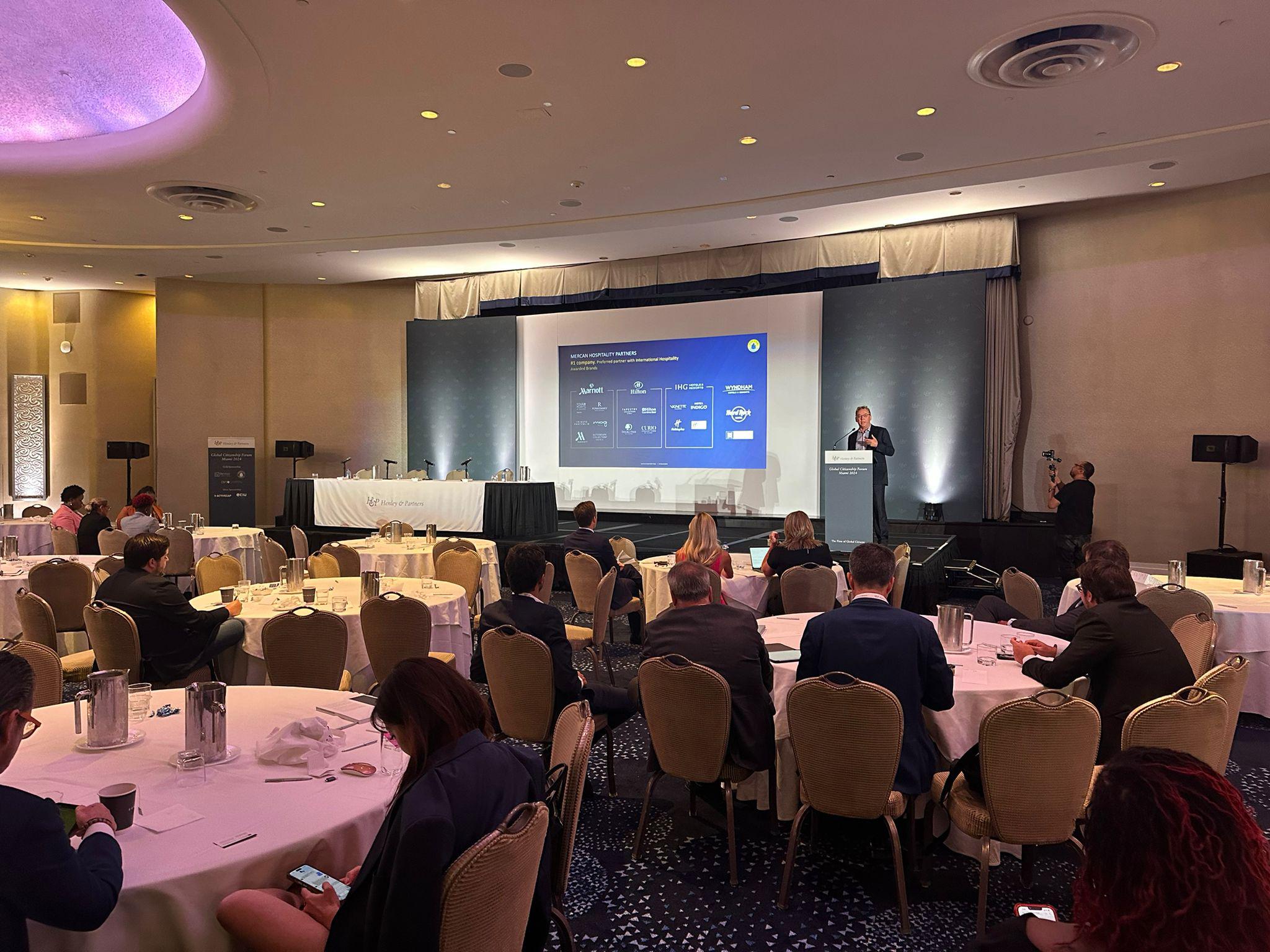
  • Mercan Group Strengthen Key Partnerships for the Future at Global Citizenship Forum Miami 2024

    On September 19, 2024, the city of Miami hosted the renowned Global Citizenship Forum at The Fontainebleau Hotel. This exclusive one-day event in partnership with Henley & Partners brought together world leaders, industry pioneers, and experts in the citizenship and residence by investment (RCBI) space, offering a deep dive into the trends, regulations, and opportunities.

    Our company had a strong presence at the event, represented by our team with Jerry Morgan, Jason Morgan and Mehdi Kadiri. As a major player in the Portuguese RCBI market, Mercan Group was at the forefront of discussions surrounding the most promising investment opportunities in Europe, namely in Portugal.

    A highlight of the day was Jerry Morgan’s participation in a panel discussion on the funds eligible under the Portuguese RCBI. Jerry shared key insights on how investors can leverage these funds to benefit from the residency options in Portugal. A country known for its high quality of life, robust economy, and favorable investment climate. He also delved into the recent changes in Portuguese regulations and how Mercan Group helps navigate these complexities to maximize investment success.

    The Global Citizenship Forum provided an invaluable platform for industry leaders to share expertise, build new partnerships, and explore future collaborations. With Portugal continuing to be a top destination for RCBI, Mercan Group stands out as a trusted partner in guiding investors through this dynamic landscape.

    Read more, here!